
- SCIENTISTS UNVEIL THE FACE OF A PREVIOUSLY UNKNOWN HUMAN ANCESTOR
Researchers have uncovered what may be the earliest known human face in Western Europe, which could alter our understanding of human evolutionary history.
The ancient human referred to as 'Pink' resided in Spain in the Iberian Peninsula around 1.1 to 1.4 million years ago.
This indicates that Pink significantly precedes the appearance of modern humans, Homo sapiens, who arrived on the continent approximately 45,000 years ago.
The fossilized remains differ significantly from other early hominin specimens discovered in the region, suggesting that Pink might represent an entirely new species of human.
The pieces of this ancient human face were found in 2022 within a cave known as Sima del Elefante. Where some of Europe's oldest human remains have been discovered.
Nevertheless, Pink seems to have a distinct architecture compared to Homo antecessor, a different hominin species that inhabited the region as far back as 860,000 years ago.
Rather than resembling us, he looks more like Homo erectus, an even older human species that appeared in Africa about two million years ago and was the first to walk upright similar to contemporary humans.
The research team thinks that Pink's species might have been some of the earliest humans to reach Europe, only to be eradicated subsequently due to a rapid change in the climate.
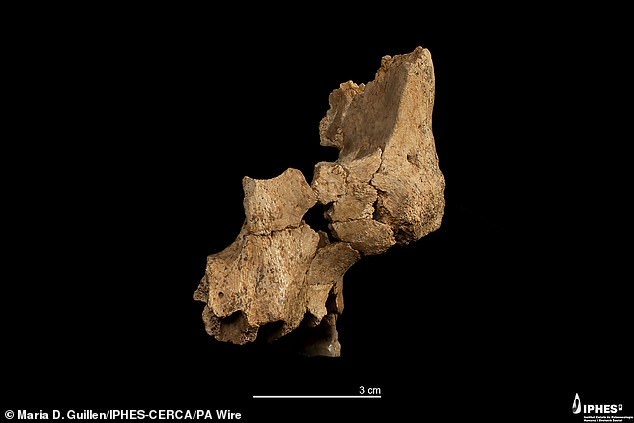
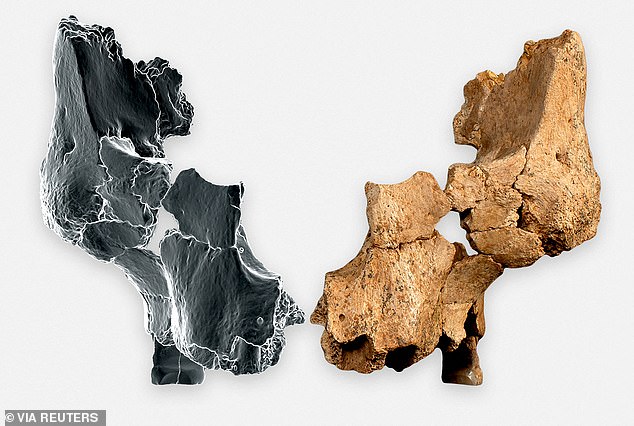
The remnants discovered at Sima del Elefante, consisting of multiple fragmented pieces along with two tooth sections, are thought to represent the earliest known instance of human facial bones in Western Europe.
The researchers dubbed the subject 'Pink' inspired by Pink Floyd's album "Dark Side of the Moon," known as 'La cara oculta de la luna' in Spanish, with 'cara oculta' translating to 'hidden face.'
When Pink’s remains were uncovered, researchers initially believed that they might be attributed to another one of the ancient human species identified in the region.
Inside the cave, scientists had earlier discovered remnants of Homo antecessor from approximately 860,000 years ago.
By examining numerous other animal fossils discovered in the same stratum of the cave along with evidence of periodic changes in Earth’s magnetic field imprinted in the soil, scientists determined that Pink's remains date back to between 1.1 and 1.4 million years ago.
Moreover, upon meticulously rebuilding the remnants, it was evident that Pink’s facial structure did not match any known ancient human species from the region.
Dr María Martínón, who directs the National Center for Research on Human Evolution, comments: "While Homo antecessor has a more contemporary facial appearance and pronounced nose bones similar to those found in Homo sapiens, Pink displays traits that are more archaic, akin to Homo erectus, notably through its flattened and less developed nasal configuration."
Homo erectus was the initial human species to adopt an upright stance and walk similar to contemporary humans, and it was also the first to employ stone implements for slicing purposes.

Once this species appeared in Africa roughly two million years ago, it spread out into Asia and eventually reached Eastern Europe as well.
At a location in present-day Georgia, paleontologists have unearthed five craniums attributed to Homo erectus. tracing back 1.8 million years .
Nevertheless, the fossil records from Western Europe remain notably sparse until 800,000 years ago.
Scientists have discovered just one tooth and some stone tools from approximately 1.4 million years ago in Spain, alongside a lower jawbone from Sima del Elephant dating back to approximately 1.1 million years ago.
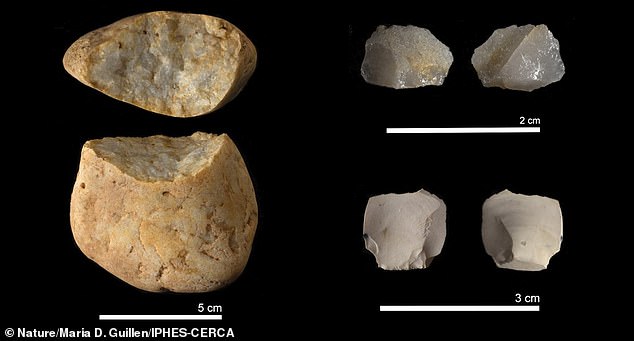
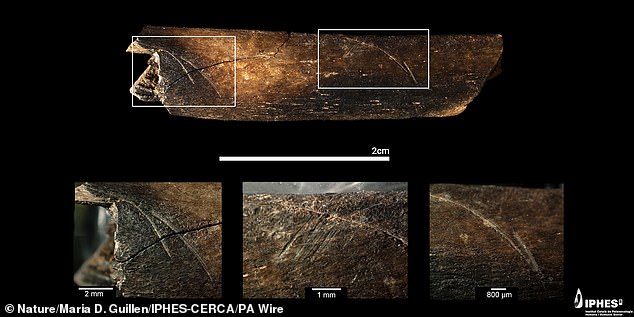
Close to where Pink's remains were found, scientists also uncovered stone implements crafted from quartz and flint, as well as animal bones with distinct signs of cutting.
This suggests that Pink and their kin had established a basic tool-making industry and were skilled at butchering animals for meat, similar to what was done by Homo erectus.
The study’s co-author, Dr. Xosé Pedro Rodríguez from the University of Rovira i Virgili (URV), comments, "These findings indicate a successful approach for survival and underscore the capability of these early humans to utilize the natural assets present within their surroundings."
If Pink indeed belongs to the Homo erectus species, this discovery would indicate that this ancient human ancestor was much more widespread and existed earlier than what scientists previously believed.
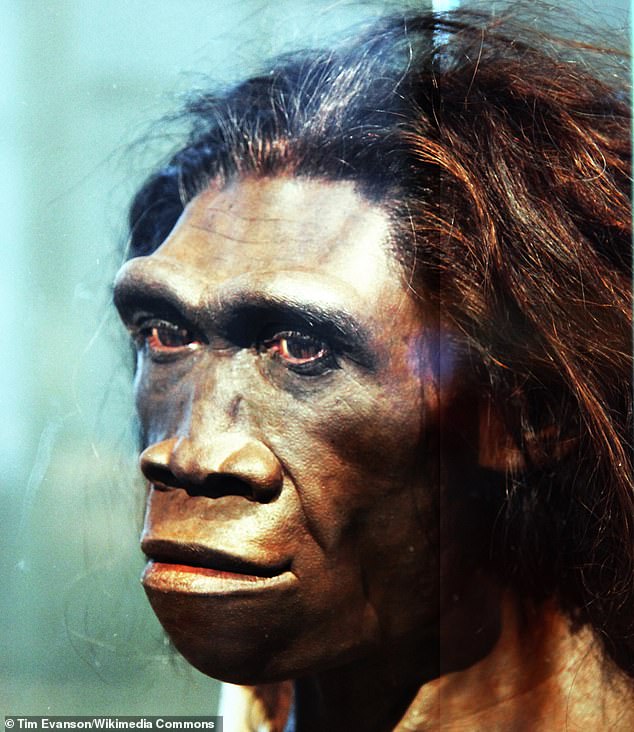
Nevertheless, the researchers remain unconvinced that Pink merely belongs to this particular species of human ancestors.
Even though their skulls are alike, Pink's face has a more slender structure compared to specimens of Homo erectus discovered throughout Asia and Africa.
However, based solely on a few bone pieces and two worn teeth, the scientists cannot yet confirm that Pink represents an entirely new species.
Rather than doing so, they chose to label Pink as 'Homo affinis erectus,' employing the Latin word 'affinis' to indicate its closeness to the recognized species.
Dr. Martinón states: "There isn't enough evidence yet to make a conclusive categorization; therefore, we chose the designation Homo affinis erectus."
She notes that this step was taken to "recognize Pink’s connections to Homo erectus while still allowing for the chance that the remains could be from a different species."
The scholars contend that Pink's species belonged to the initial surge of human movement into Western Europe.
However, that initial migration seems to have ended abruptly as the climate on the Iberian Peninsula underwent a sudden change.

When Pink resided in Spain, the Sierra de Atapuerca area was characterized by a blend of woodlands, marshy meadows, and intermittent bodies of water — creating a bountiful habitat for early human inhabitants.
However, earlier research indicates that there might have been a abrupt climate change approximately 1.1 million years ago. any of which might have led to the extinction of humanity.
This might account for the significant gap observed in the fossil record between specimens attributed to Pink and those of the subsequent Homo antecessor species.
Dr. Eudald Carbonell, a paleontologist from URV and co-director of the project, states: "The evidence pointing to distinct hominin populations in Western Europe throughout the Early Pleistocene indicates that this area played a crucial role in the evolutionary journey of the genus Homo."
Read more