
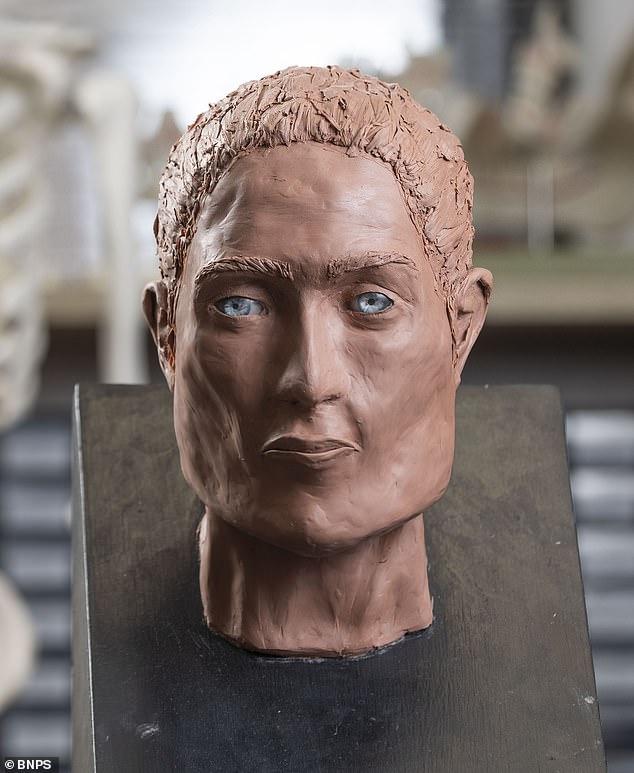
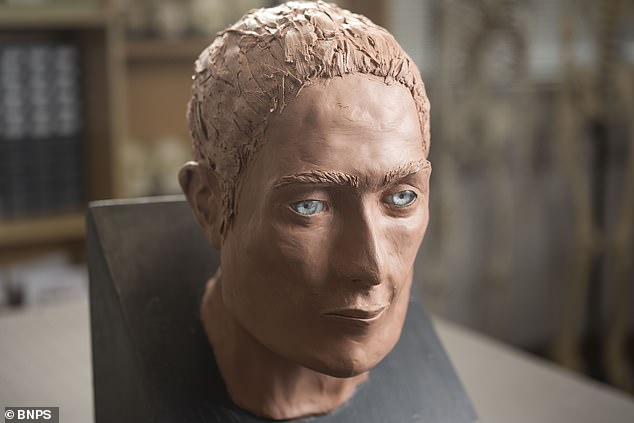
An Iron Age woman's visage has been reconstructed following the discovery of her skeletal remains, which were exposed due to a cliff collapse approximately 2,000 years afterward.
Archaeology student Amber Manning has employed contemporary technology to recreate 'Kimmeridge Woman'.
She is believed to have been part of the Durotriges tribe, which resided in present-day Dorset, and was laid to rest in Kimmeridge on the Isle of Purbeck.
Nearly her entire skeleton emerged from the cliff because of erosion and has since been kept at Bournemouth University.
Studies verified that the remains were from the first century AD.
Ms. Manning, who is pursuing a master’s degree in bioarchaeology at Bournemouth University, has unveiled what the woman likely resembled by recreating her precise facial features for her coursework.
To create the likeness of 'Kimmeridge Woman', she employed radiocarbon dating, a method known as photogrammetry, along with 3D printing and techniques for reconstructing faces.
She is thought to have been in her 20s or 30s at the time of death, stood about 5 feet 2 inches tall, and had recently given birth.
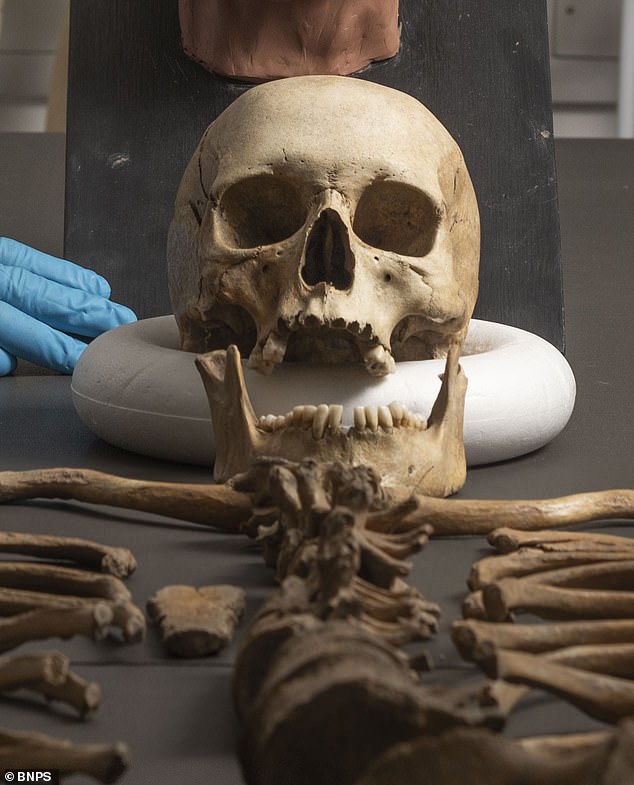
The small bones discovered near the woman suggest a baby who was born but passed away within its initial half-year of life; however, whether the infant was related to the woman is uncertain.
The woman's wisdom teeth failed to develop, and although her teeth exhibit some signs of wear, there is no indication of decay.
She exhibited signs of spinal deterioration, pointing towards the initial phases of arthritis as well as problems linked to a herniated disk, which implies a history of strenuous manual work.
Ms. Manning stated, "My aim was to focus on typical women for my master’s project, and this presented an excellent chance."
'Their skeletal structure was remarkably well-preserved.'
'When I create a reconstruction, I often feel like we are peering into their world.'
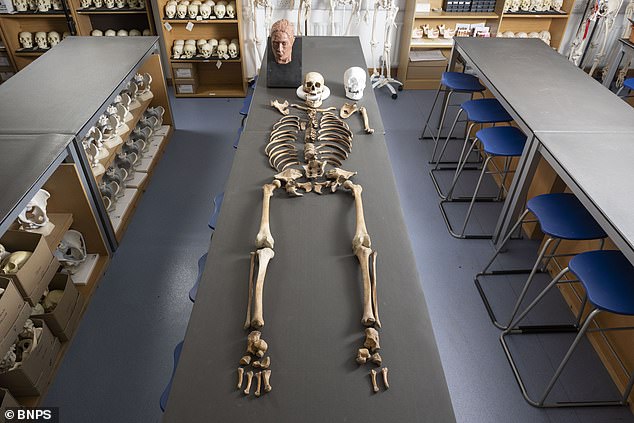
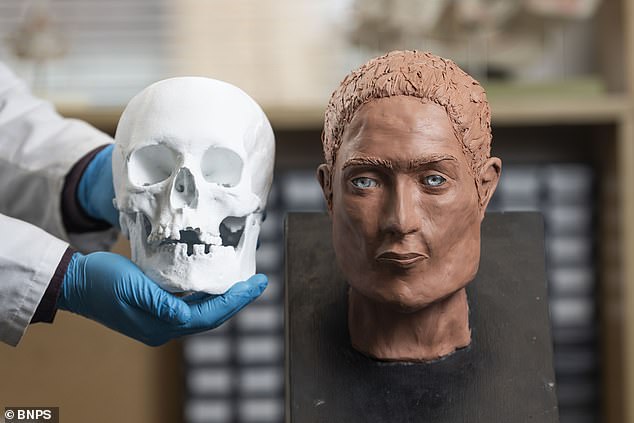
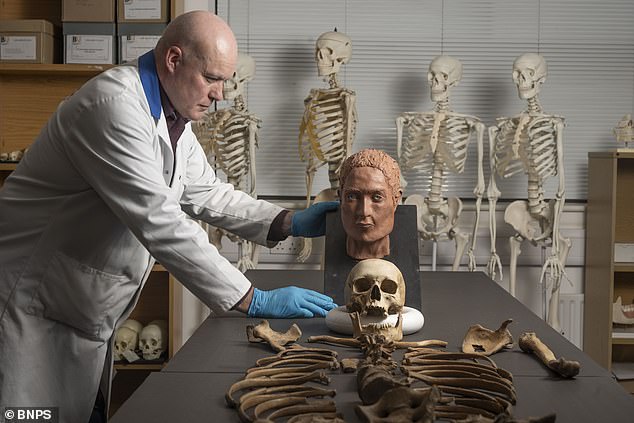
To facilitate the reconstruction, a 3D digital replica of her skull was generated through photogrammetry—a technique involving numerous photos captured from various perspectives to determine the object’s form.
This was subsequently 3D printed.
I considered her age, gender, weight, and ethnic background when assessing tissue thickness, since these elements play a crucial role in determining it. In this instance, she was a female around 20 to 30 years old, exhibiting indications of malnutrition at some point in her life.
'I felt immense pride in the score I received and how my research unfolded.'
Ms. Manning collaborated with her university supervisor, Dr. Martin Smith, on this project. He commented, "We're delighted to present and share some of our discoveries."
The past is shared among all of us, and each person ought to have the chance to explore the lives that we can occasionally piece together.
I believe it’s quite likely that the woman from Kimmeridge would easily recognize the landscape we continue to inhabit today—taking her to Kimmeridge now or other areas of Dorset, she would surely identify where she was and see places similar to those she knew before.
'Several recent research initiatives at Bournemouth University have revealed numerous significant discoveries which contribute to our growing understanding and vivid depiction of daily life during this era.'
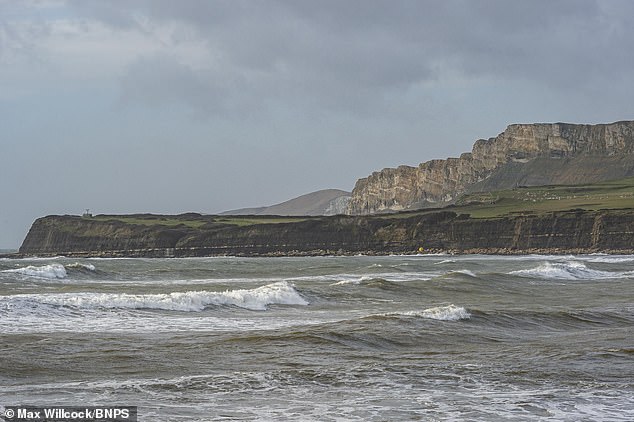
Kimmeridge Bay stands out as a prime location for geologists, thanks to its extensive collection of Jurassic period fossils.
During the Roman era, it served as an industrial hub for salt manufacturing and shale mining.
It is likewise designated as a Site of Special Scientific Interest (SSSI).
In 2023, the same year she graduated from Bournemouth University, Amber was awarded the prize for the best research project.
The 3D model of the head will be exhibited at Wareham Town Museum starting April 5.
Read more