
Recent studies indicate that complex life on our planet emerged approximately 1.5 billion years sooner than initially believed. Here, we examine the leading hypotheses regarding the origins of life.
For hundreds of years, humans have pondered over the beginnings of life on Earth, our existence—essentially, our origins and our future destinations.
This query encompasses fundamental disciplines such as chemistry, biology, and physics, along with philosophy, psychology, and aspects of belief. Early scholars were involved in various fields of inquiry. However, these core sciences are typically seen as more exact and straightforward to quantify compared to the others, which is why researchers often concentrate their efforts on them nowadays.
During the 19th century, French chemist Louis Pasteur showed that life invariably arises from preexisting life. Whether they be plants, animals, or microorganisms, all organisms reproduce within their own kind.
However, what about the initial living organism? If it emerged from non-living matter, at what point and through which process did this occur?
Life could potentially be far more ancient than our previous understanding.
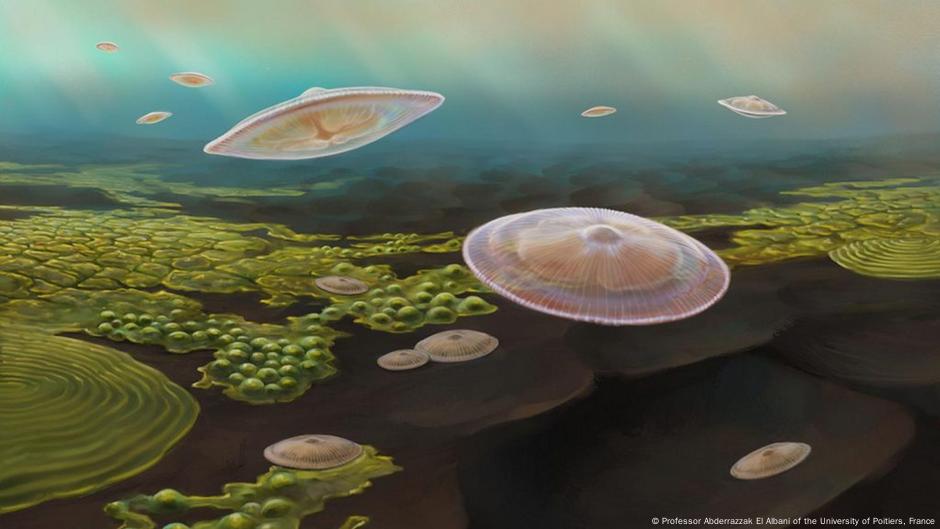
A research conducted by Cardiff University in Wales, UK, indicates that complex life on our planet may have started 1.5 billion years before what was initially believed. The team asserts they discovered indications within Gabon’s rock formations suggesting favorable living conditions existed around 2.1 billion years ago.
Published in the journal Precambrian Research The research indicates that approximately over 2 billion years ago, the clash between two continental plates generated a fertile setting conducive to the development of complex life forms.
This would have generated phosphorus and marine oxygen essential for the shift from unicellular organisms to more advanced life forms.
However, their existence was brief — it seems these complex lifeforms were restricted to an inland sea and could not expand globally.
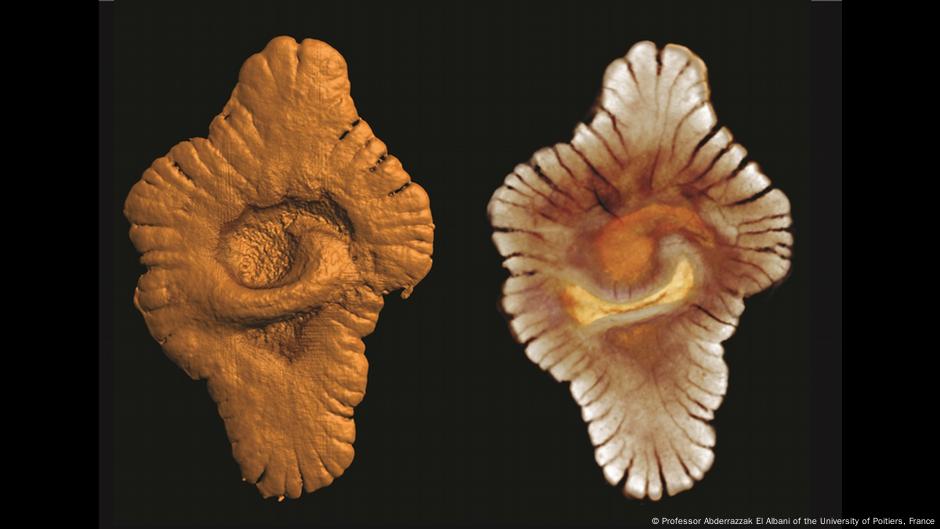
This study questions the prevailing scientific view that complex animals first emerged 635 million years ago, proposing instead that there was an earlier unsuccessful bid for more intricate forms of life on our planet.
What alternative theories are there regarding the beginnings of life on Earth?
Several researchers have voiced skepticism regarding the recent discoveries and urged for additional studies.
However, this research has reignited discussions regarding how complex life originated on our planet.
Throughout the last hundred years, scientists have created several dozen.
In this section, we examine several of the most common ones.
1. The Theory of Primeval Broth
A widely accepted hypothesis is the "primordial soup" theory, suggesting that life emerged from organic molecules in an early ocean environment.
British biologist Charles Darwin (1809-1882) was the pioneer who proposed that life might have originated in "a warm little pond."
It wasn't until the 1950s that his hypothesis underwent experimentation. The renowned American chemist and Nobel laureate Harold Urey, along with biochemistry researcher Stanley Miller, constructed an early Earth-like environment in their lab setting. Inside this sealed system, they combined water, methane, ammonia, and hydrogen gases then applied electrical charges to mimic thunderstorms acting as a trigger mechanism.
Following several days, amino acids, which are the fundamental components of life, had developed.
2. The concept of cosmic life theory
A fascinating theory suggests that life on Earth initially originated beyond our planet, specifically from outer space. This idea proposes that living organisms or the fundamental building blocks required for life were transported to Earth from space.
This train of thought does not pinpoint precisely where life began or in what shape it came to our planet. However, the prevailing notion suggests that it might have been delivered via a meteorite containing microorganisms that struck Earth.
The initial advocates for this concept included British astrophysicists Fred Hoyle and Chandra Wickramasinghe. During the 1970s, their research indicated that comets held sufficient organic material to potentially initiate life on planets like Earth.
3. The hypothesis of hydrothermal vents
The hydrothermal vent hypothesis proposes that life on Earth may have originated at the bottom of the oceans near these hydrothermal vents. These are seafloor outlets that release heated water filled with minerals.
Michael Russell, a British geologist and part of the NASA Astrobiology Institute, suggested that alkaline hydrothermal vents releasing hydrogen, hydrogen sulfide, and methane might have offered suitable circumstances for the creation of basic organic compounds.
Even though the surroundings of hydrothermal vents are deemed harsh—with temperatures soaring up to 400°C (752°F)—there are microbes that thrive in these settings through chemosynthesis.
Chemosynthesis is a biological process where microorganisms produce their sustenance. Instead of relying on light, they utilize energy derived from chemical reactions. This capability enables them to thrive in dim environments like the deep sea bed.
4. The RNA world
The RNA world hypothesis suggests that prior to the emergence of DNA and proteins, early life forms on Earth were likely centered around an adaptable molecule known as RNA (ribonucleic acid).
DNA (deoxyribonucleic acid) enables organisms to grow, endure, and replicate. These DNA sequences transform into messages or directives that facilitate the creation of proteins—complex molecules crucial for nearly all bodily functions—and sustain life.
On the contrary, RNA fulfills these two crucial roles for living organisms: it holds genetic data and serves as a catalyst for vital chemical processes.
During the 1980s, chemists Thomas Cech and Sidney Altman uncovered ribozymes—RNA molecules possessing catalytic properties—which earned them a Nobel Prize.
Researchers have suggested that early forms of life may have relied on self-replicating RNA molecules that could also facilitate basic chemical reactions before the emergence of modern organisms. Over time, these were supplanted by proteins, which serve as more effective catalysts.
Various hypotheses exist regarding the beginnings of life. However, these are the ones that have garnered the most focus within the scientific community.
Everyone—including the most recent findings from Cardiff University—emphasizes the intricacy of this question, which remains captivating and thought-provoking for us today.
Edited by: Zulfikar Abbany
Primary source:
A recent study from Cardiff University suggests that complex life on Earth emerged approximately 1.5 billion years sooner than was originally believed, as reported on July 29, 2024. https://www.cardiff.ac.uk/news/view/2830233-complex-life-on-earth-began-around-1.5-billion-years-earlier-than-previously-thought,-new-study-claims
Author: Fernando Mateos Frühbeck